

What Is Team Capacity Planning? How to Stop Overloading Your Best People


- Why Capacity Planning Matters
- The Components of Effective Capacity Planning
- Practical Tips for Team Capacity Planning
- The Role of Software in Capacity Planning
- To Sum Up
Ask a manager whether their team has room for one more project, and the honest answer is usually a guess, based on who has seemed busy lately, not on any actual number.
Team capacity planning is the practice of tracking how much of each person’s working time is committed to which team or project, and how much genuinely remains available, so staffing decisions are based on data instead of impressions.
Done well, it prevents the two failure modes that quietly damage most teams: chronic overload that leads to burnout and attrition, and underused capacity that nobody notices because there is no visibility into it.
Our team capacity planning software shows real-time utilization across every team, right inside your org chart.
Why Capacity Planning Matters
Capacity planning is not a scheduling nicety. It directly affects retention, delivery reliability and how confidently an organization can commit to new work.
The Gap Between Awareness and Practice Is Large
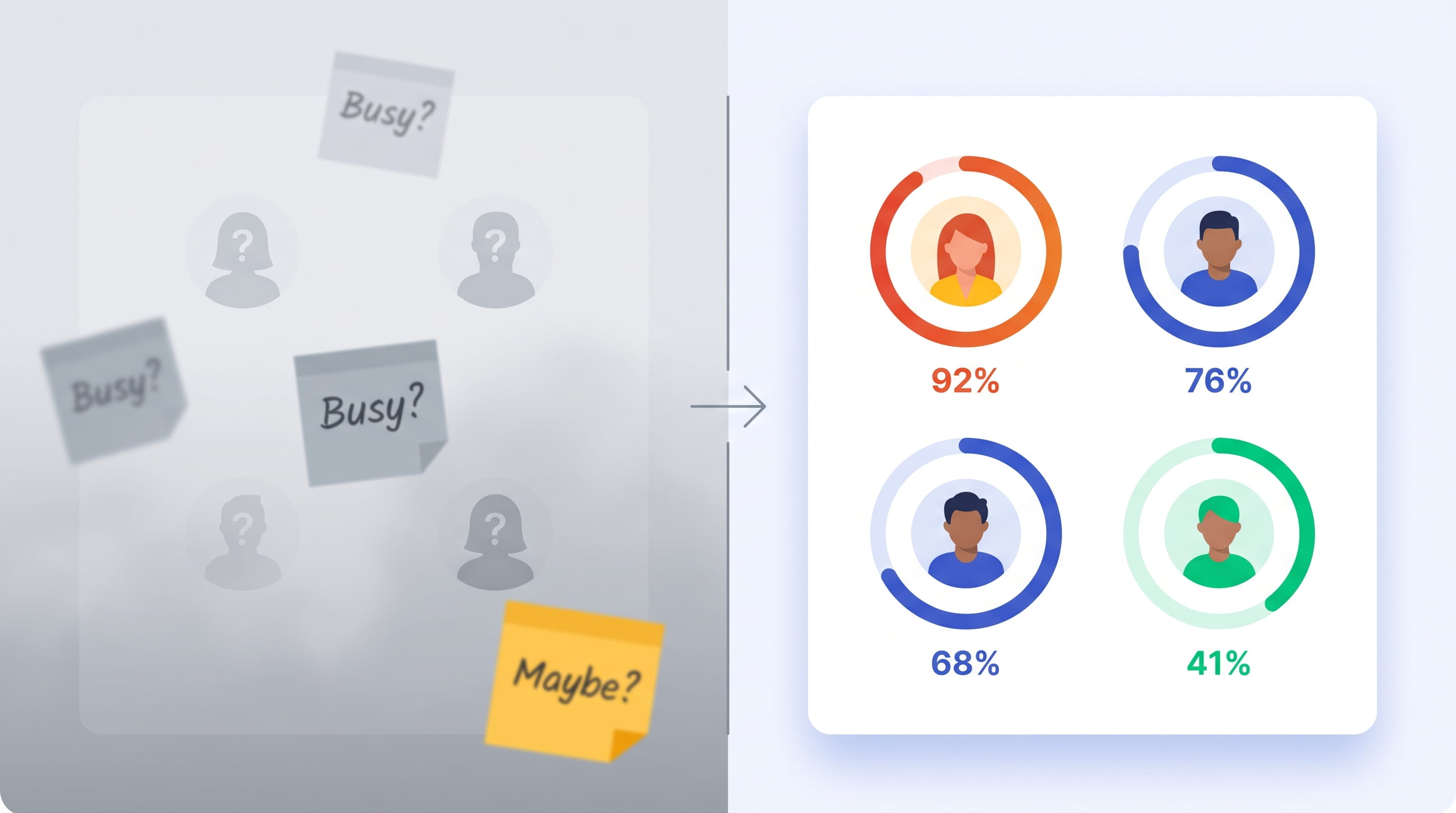
Most organizations recognize capacity planning as a pressing need, yet only a small fraction feel they are doing it effectively, a gap that shows up as chronic firefighting rather than planned staffing.
Utilization Benchmarks Exist for a Reason
A commonly cited target is 70–80% productive utilization on project work, with the remaining 20–30% reserved as a buffer for business-as-usual tasks, recovery time and inevitable disruptions. Planning everyone at 100% guarantees the buffer disappears exactly when it is needed most.
Overload Is a Leading Cause of Attrition
People who are consistently allocated above sustainable capacity do not usually complain loudly before they leave. They disengage quietly, and the departure often comes as a surprise to a manager who never had visibility into how stretched they actually were.
It Enables Confident Commitments
Knowing real, current capacity, not estimated headcount, is what lets an organization confidently commit to a new project timeline, a client deadline, or an internal initiative without overpromising.
The Components of Effective Capacity Planning
A Live Resourcing Overview
Capacity planning only works if the underlying data reflects reality right now, not a snapshot from the last planning cycle. A live overview beats a quarterly spreadsheet update.
Utilization Set at the Team Level
Because most people contribute to more than one team or project, capacity needs to be tracked per team, with the total automatically reflecting the sum across all of them.
A Genuine Buffer, Not Just a Target
Planning to 100% utilization on paper means there is no room for the unplanned work that always shows up. Building in a deliberate buffer is not inefficiency. It is what makes deadlines realistic.
Visibility Across the Whole Organization
Individual managers can see their own team’s capacity. The real value comes from an organization-wide view that shows where spare capacity exists and where it does not, so work can move to where the room is.
Practical Tips for Team Capacity Planning
Track Utilization, Not Just Headcount
Headcount tells you how many people you have. Utilization tells you how much of their time is actually available, a very different, and far more useful, number.
Build the Buffer In, Don’t Apologize for It
A team planned at 70–80% utilization is not underused. It is planned realistically. Treat the remaining capacity as intentional, not wasted.
Revisit Allocations When Priorities Shift
Capacity data goes stale the moment a project scope changes and nobody updates the allocation behind it. Make revisiting utilization part of any re-planning conversation.
The Role of Software in Capacity Planning
A spreadsheet can record what percentage of someone’s time is allocated to a project, at the moment someone remembers to update it. What it cannot do is keep that number connected to team structure, skill data, and every other team a person contributes to, updating automatically the moment anything changes.
A platform like agyleOS keeps utilization and availability inside the same org chart and profile data used for skills, roles and team structure, so a capacity change in one team is instantly reflected everywhere that number matters, with no manual reconciliation and no outdated snapshot.
To Sum Up
Capacity planning rarely fails loudly. It fails quietly, one slightly-over-allocated person at a time, until a team’s best performer burns out or a deadline slips for reasons that were visible in the data weeks earlier, if anyone had been looking.
Getting it right does not require a heavier process. It requires making utilization as visible, current and connected to real team structure as the skills and roles data most organizations already track.
By submitting this form, I confirm that I have read the privacy policy and that I consent to the processing of my personal data by agyleOS for the purposes stated. In the event of consent, I can revoke my consent at any time. Furthermore, by submitting the form, I agree to the general terms and conditions.

- Product
- Skill Management
- Interactive Org Charts
- Skill Matrix
- Performance Reviews
- Skills Gap Analysis
- Competency Management
- Employee Surveys
- Talent Management
- Team Builder
- Kudo wall
- Organizational Culture
- Internal Talent Marketplace
- Employee Development Software
- Employee Skills Inventory
- Team capacity planning
- Career pathing
- Certificate management
- Succession planning
- Personio Integration
- Resources
- Consulting
- Blog
- Walkthrough
- Events
- API documentation
- Compare
- Company